Our story
Built for British weather and the longest desk days.
Lumora makes clinical red light therapy devices for the home. The same 660 nm and 850 nm wavelengths used by dermatologists, sports physios and rehab specialists. Without the clinic price, the appointment diary, or the trip across town.
Ten quiet minutes a day. Skin, muscle, joint, bone and sleep, all addressed in a single passive session.
The founder
Mizii built Lumora because she needed it first.
Mizii grew up dealing with severe acne. The kind that grey London skies, the city air and a hereditary stack of genes conspire to make worse, not better. Every clinical product she could find felt either too gentle to do anything, or too aggressive to be used daily without the skin paying the price the next week.
The trigger to actually do something about it came from a different problem entirely. After years of sitting at a desk in London for ten hours a day, her lower back had become a permanent complaint. Stretching helped a little. Physio helped a little more. Nothing closed the gap completely.
She flew abroad to read into what dermatology and physiotherapy clinics were actually using behind closed doors. Red and near-infrared light kept appearing in both worlds. Same wavelengths, different protocols, same result: cells working better, surfaces healing faster, tissue moving more.
Lumora launched in 2025. The brief was simple. Make the clinical version. Make it live at home. Make it something you can use in ten minutes a day and forget you own until you notice you stopped having the problem you bought it for.
The shift
Red light is moving out of the clinic. Fast.
For thirty years red light therapy lived in NASA labs, dermatology clinics and Premier League physio rooms. Studied, published, expensive, gated. Athletes recovered under it after games. Surgeons used it on post-procedure scars. Astronauts ran trials on it for muscle wasting in zero gravity.
Then the LEDs got cheaper. The optics got better. The clinical research broke through the three thousand peer-reviewed studies mark. And the home market opened.
In the last three years it has moved from niche biohacker forums to the wellness shelf next to the protein powder. Search interest in red light therapy has more than tripled in the UK since 2022. The clinical evidence base for skin, recovery and sleep is now broader than most over-the-counter supplements.
Why everyone ends up with one
Ten minutes a day. That is the whole protocol.
Skin
660 nm reaches the fibroblasts that build collagen. Tone, texture, scars, post-procedure marks, ageing skin across face and body.
Muscle
850 nm drives the mitochondria in tired muscle tissue. Less DOMS, faster training rebound, less stiffness after long days.
Joint
850 nm penetrates the synovial membrane. Morning knee and shoulder stiffness eases over weeks of daily use.
Sleep
Pre-sleep red light exposure deepens slow-wave sleep. Owners consistently report falling asleep faster within the first fortnight.
Skin, muscle, joint and sleep are not four separate problems. They are one. Cells running short on the energy they need to repair, across systems that all use the same biology. One ten minute session, fired across the whole body, addresses all four at once. That is why most owners stop thinking of Lumora as a skin device or a recovery device and start thinking of it as the thing they do before bed.
The range
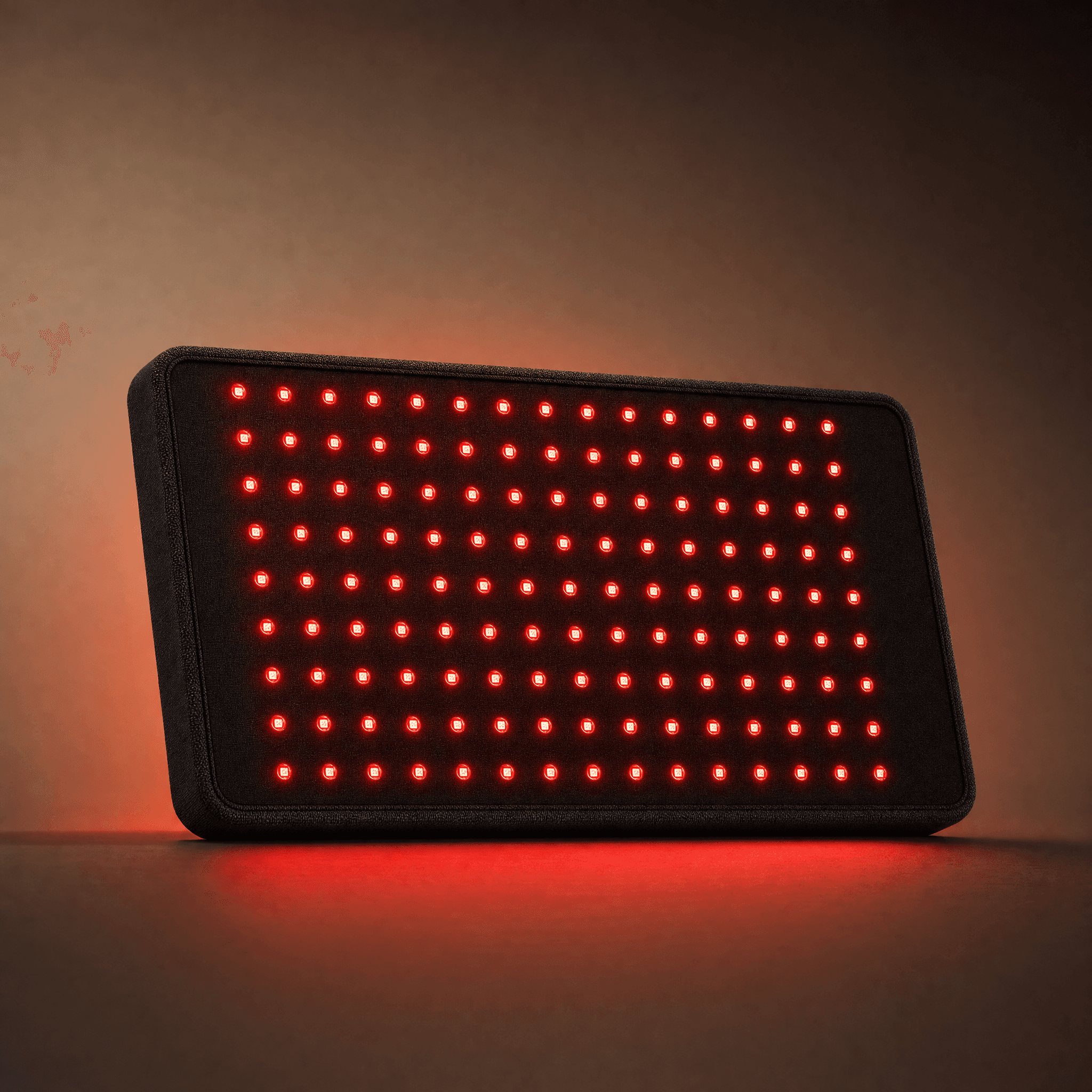
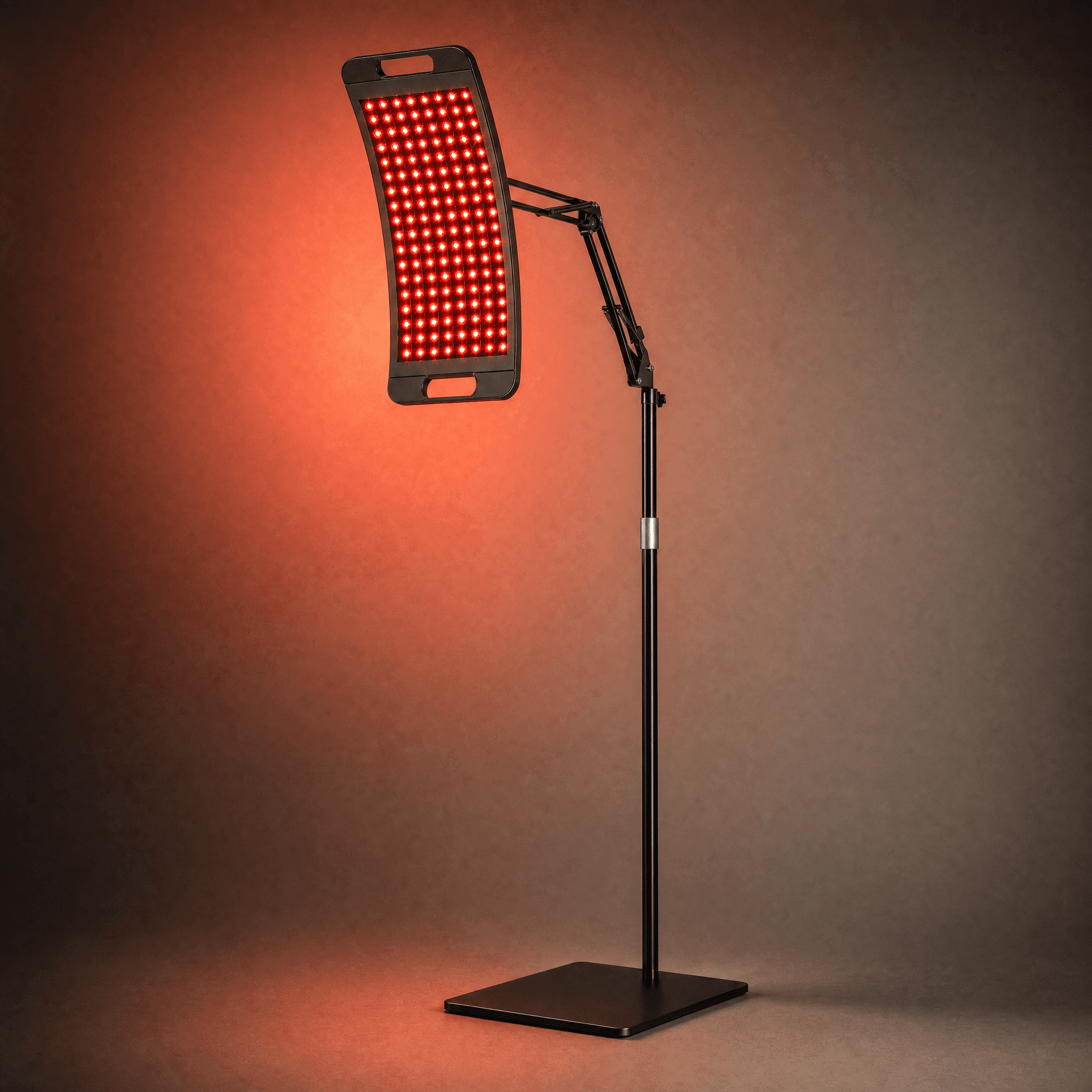
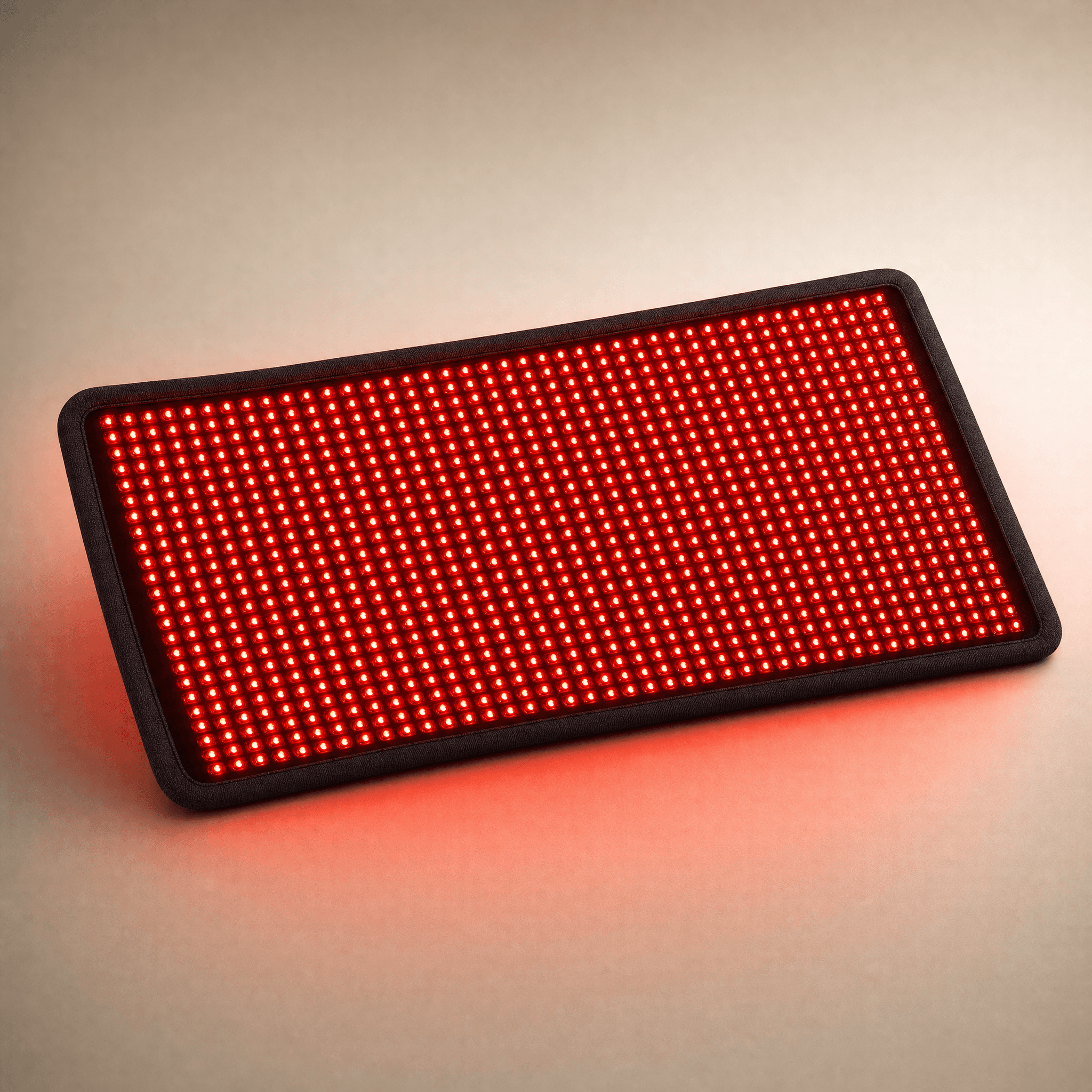
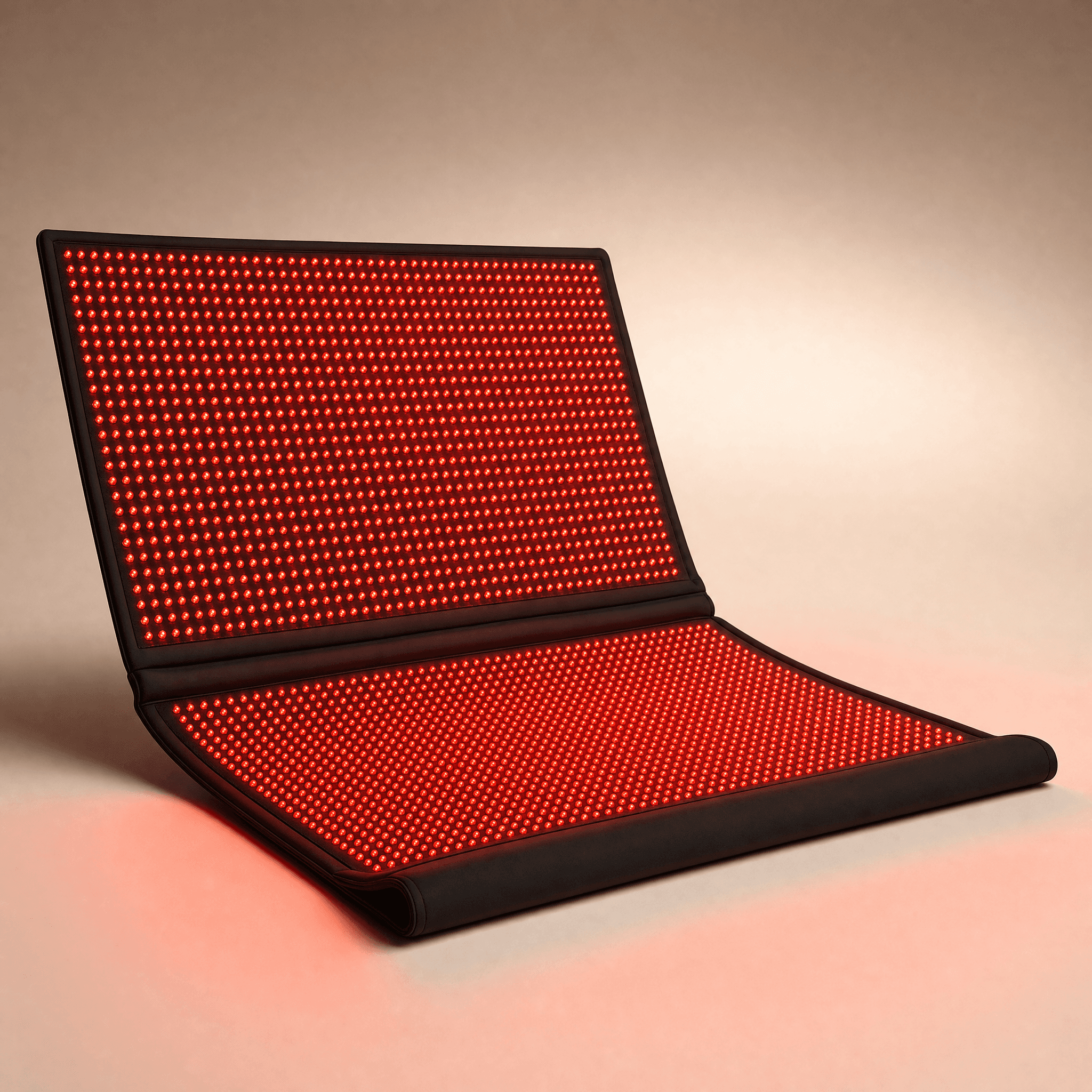
Four devices. One wavelength engine.
Same clinical 660 nm and 850 nm light across the entire range. The form factor is the only thing that changes, picked to fit how you actually want to recover.
Cellular recovery. Every age. Every day.
Built in the UK, for the UK climate, indoor lifestyle and desk-bound days that wear the rest of you down. Ten quiet minutes a day, from home.